
In Trường Lệ, Hội An, some families make Cao Lau noodles 364 days a year, taking only one day off for the Lunar New Year. Their work begins at one in the morning, following techniques passed down through generations.
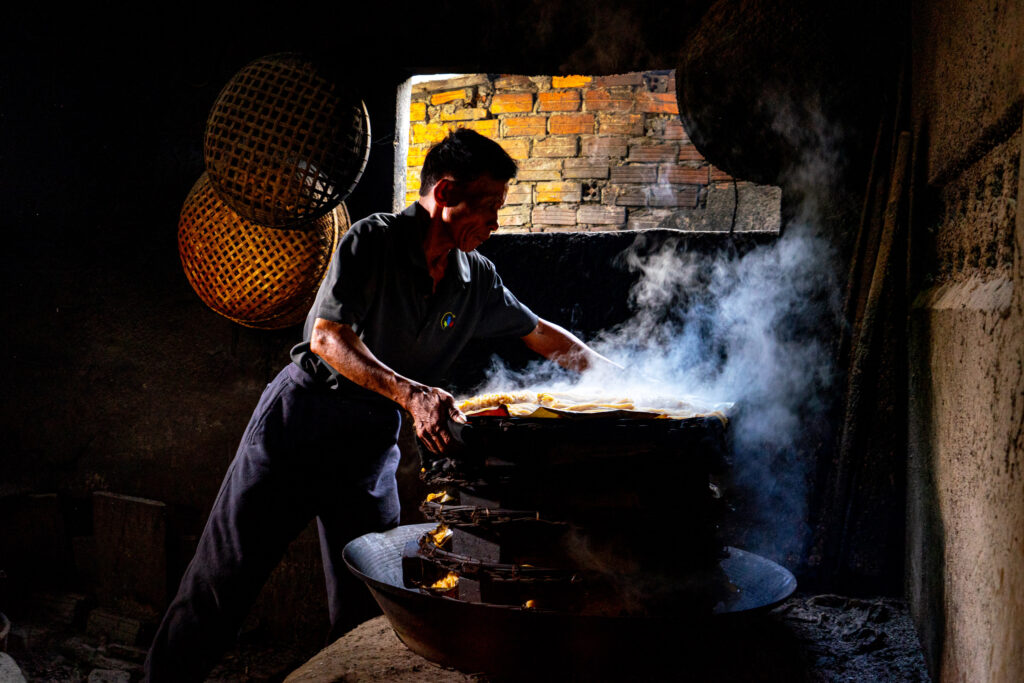
What I love most about Cao Lau is not simply its flavour, but the noodles themselves. Thick, firm and pleasantly chewy, they absorb just enough sauce while retaining their distinctive texture. To understand how these noodles are made, I spent an entire night with the noodle makers of Trường Lệ, where families have preserved this traditional craft for generations.
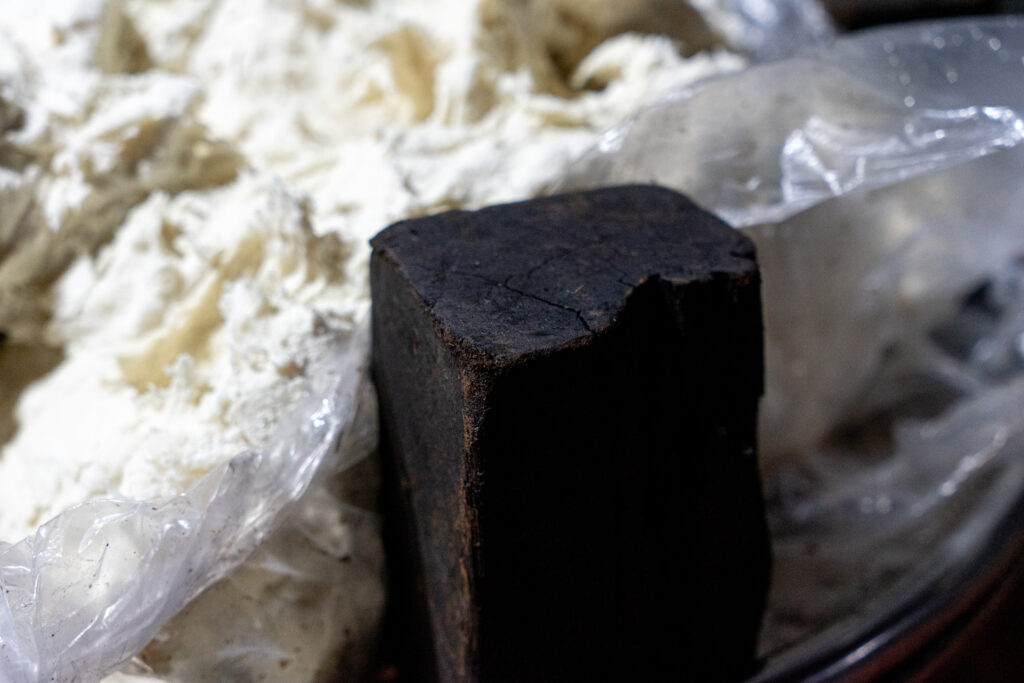
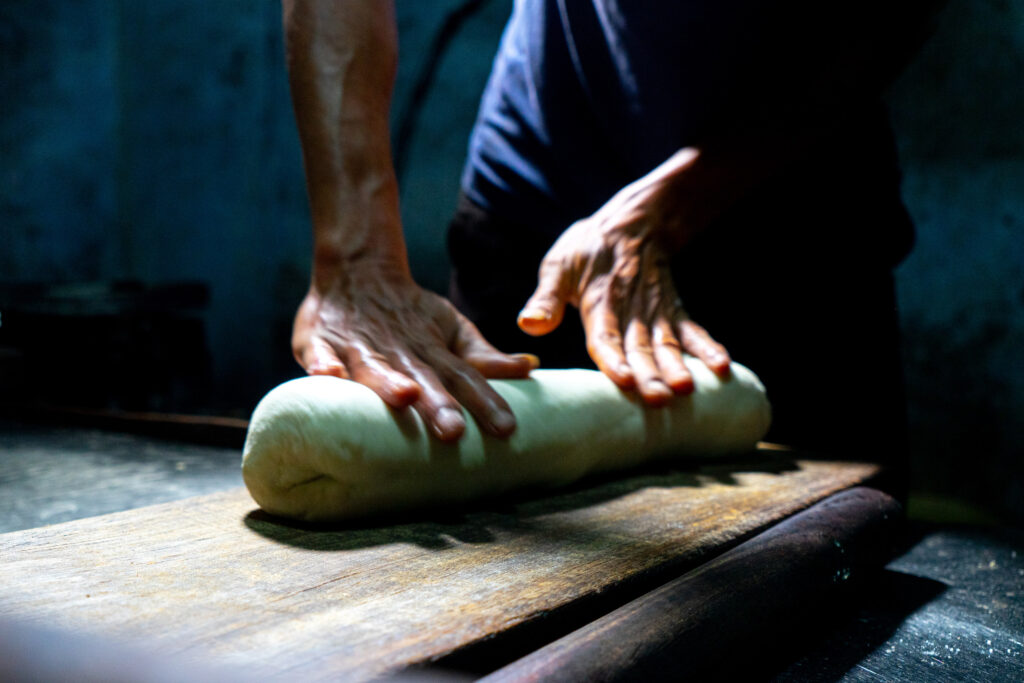
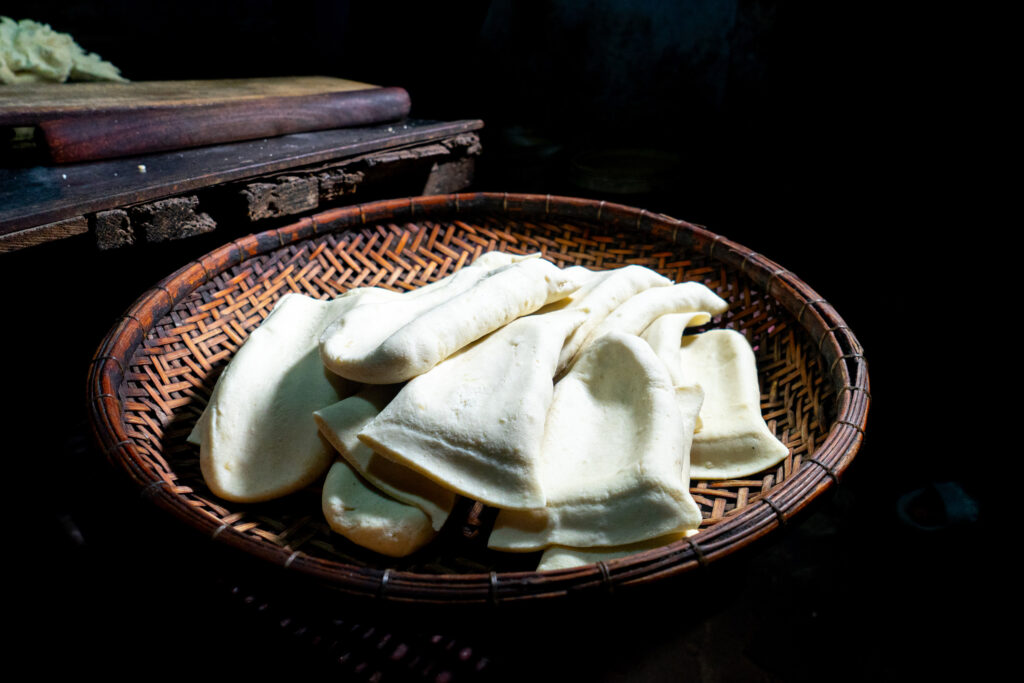
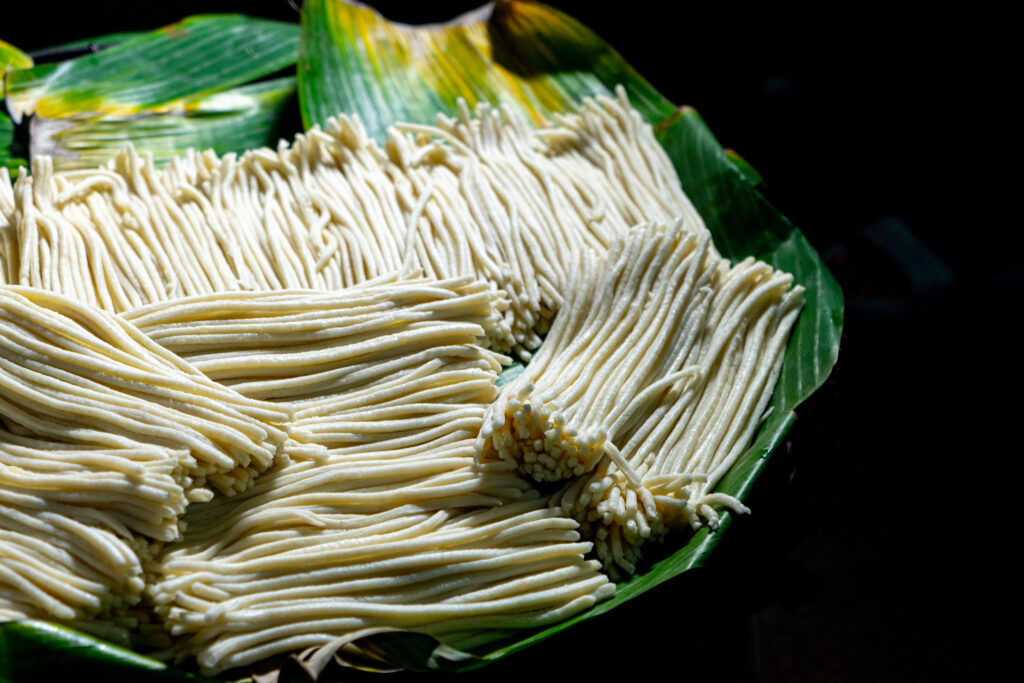
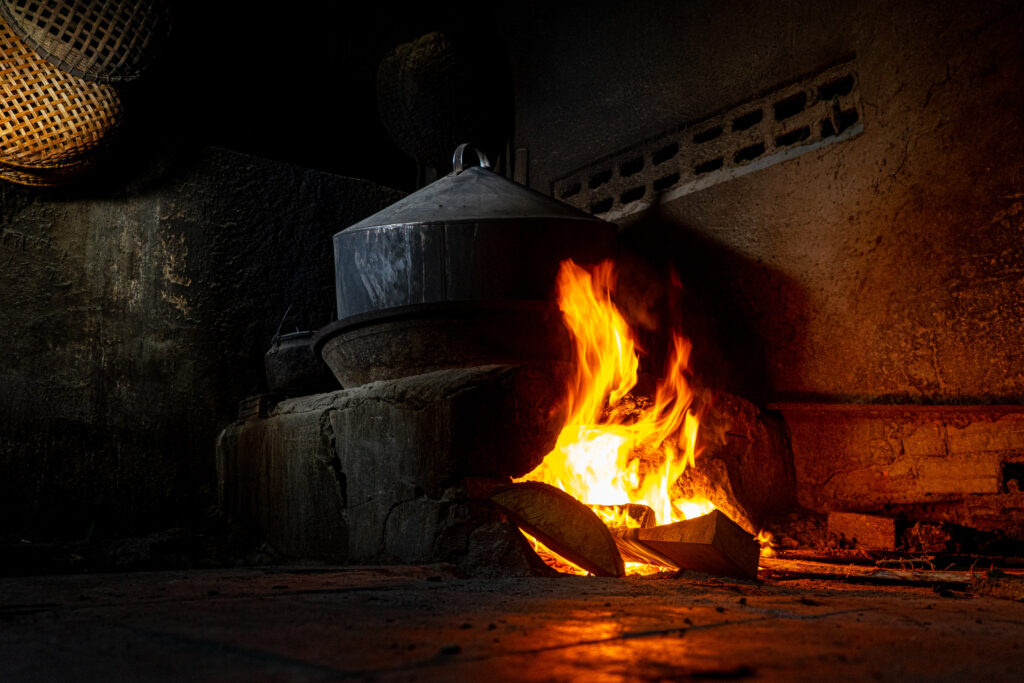
At one in the morning, the fires are lit. The rice has already been soaked, the flour prepared, and the work begins in a carefully organised sequence. Transforming rice into Cao Lau noodles requires several stages of soaking, grinding, filtering and kneading. Most importantly, the dough must be steamed twice. After the first steaming, it is rolled out, cut into strips and steamed again. Only through this repeated process, involving both water and fire, do the noodles develop their characteristic firmness and elasticity.
There is a fascinating balance between water and fire, two seemingly opposing elements that depend entirely on one another. Water provides moisture, fire cooks the dough, and the noodle maker’s experience determines precisely when each stage is complete. Even a slight difference in temperature or timing can affect the final texture. Such knowledge is difficult to capture in a written recipe. Instead, it is passed from one generation to the next through years of working side by side.
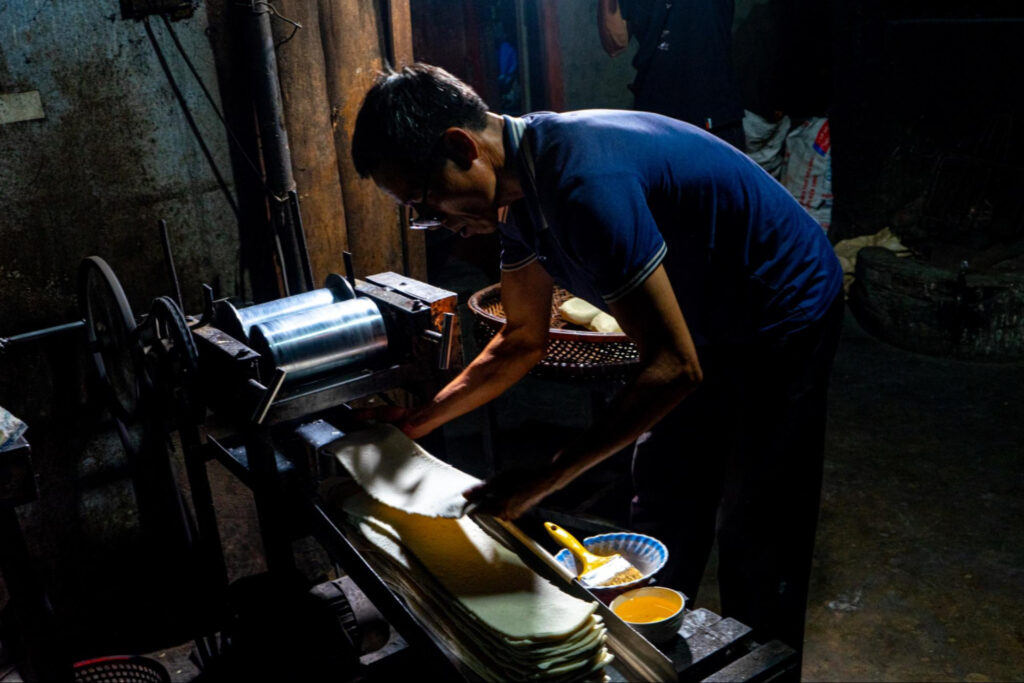
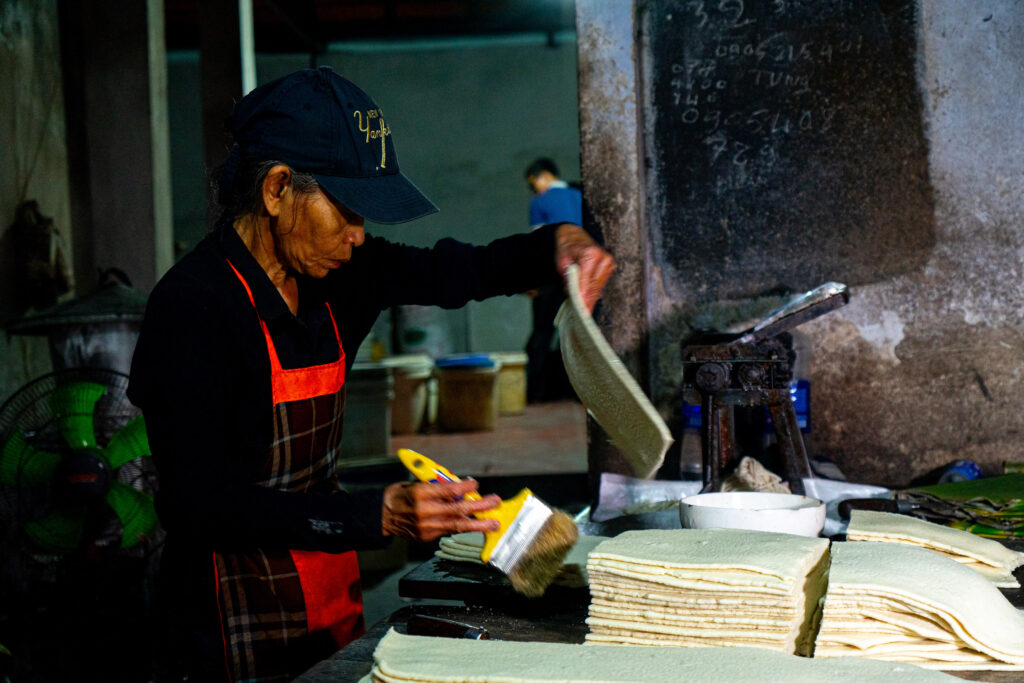
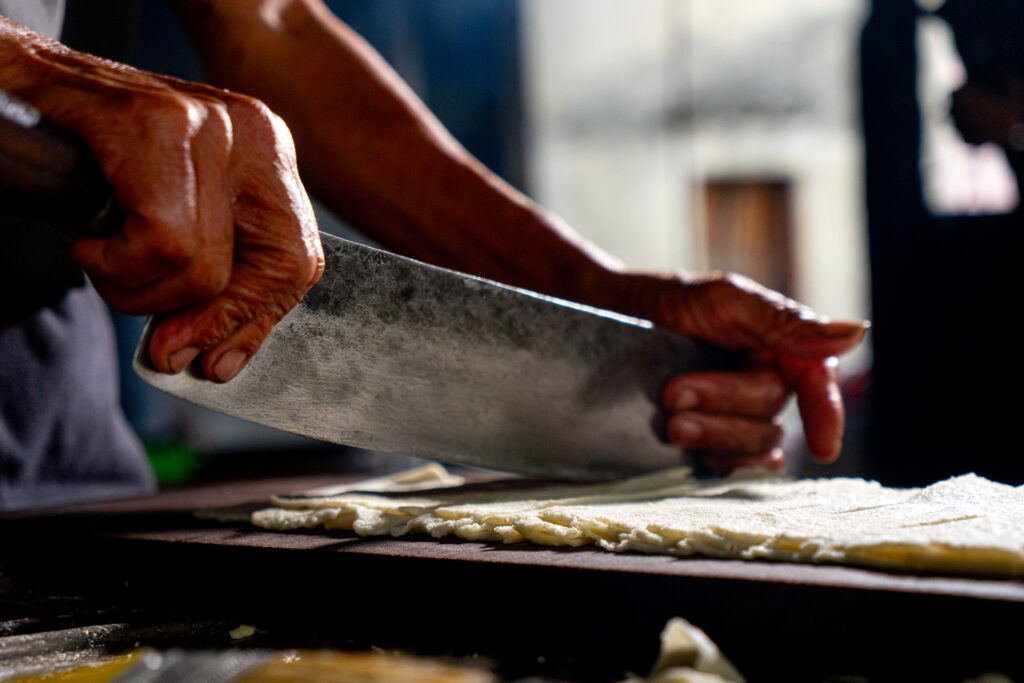
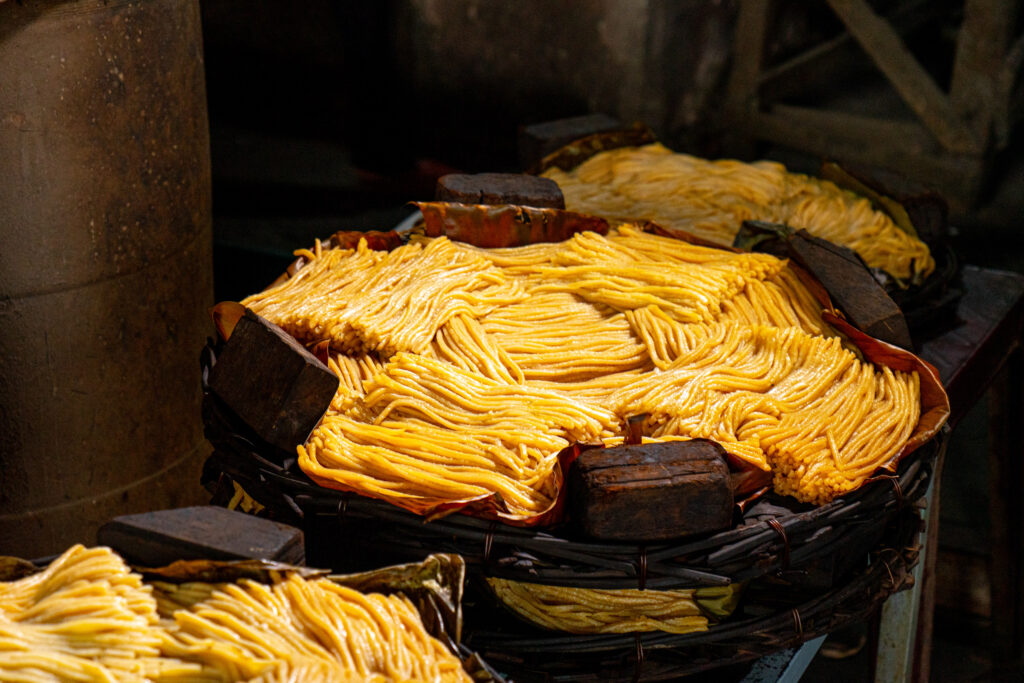
Throughout the night, steam rises from the cooking stoves as trays of freshly prepared noodles gradually fill the workshop. Each person has a particular task, and everyone works in a steady rhythm to complete the orders before dawn. What surprised me most was the dedication of these families, many of whom maintain this demanding schedule almost every day of the year, without weekends, resting only on the first day of Tết.
By morning, the noodles are delivered to restaurants and small food stalls across Hội An, where they are served with slices of char siu pork, fresh herbs, crispy fried Cao Lau noodles and a little rich, savoury sauce. A good bowl of Cao Lau does not require an elaborate combination of ingredients, but the noodles must be just right. Their firmness, satisfying chew and ability to absorb the sauce without becoming soft are what give this traditional Hội An dish its unmistakable character.
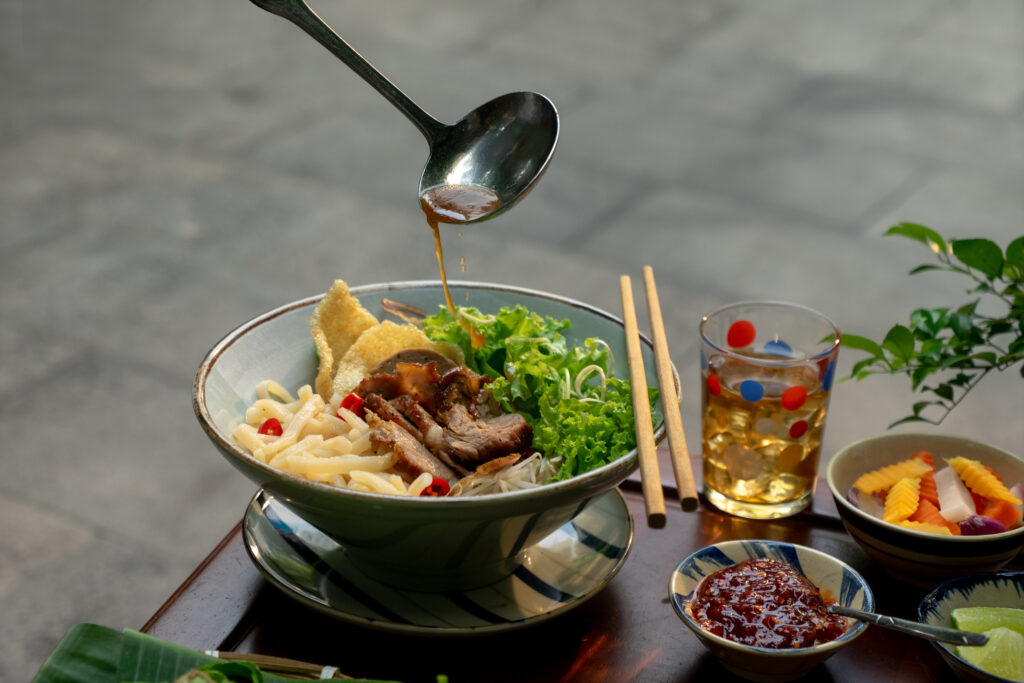
I have always been fascinated by traditional cooking techniques, particularly those in which the skill and experience of the maker matter as much as the ingredients or the recipe itself. Spending a night in Trường Lệ gave me a deeper appreciation of the people behind Cao Lau, a craft in which water, fire and human hands come together to create a dish that has been part of Hội An’s culinary heritage for generations.
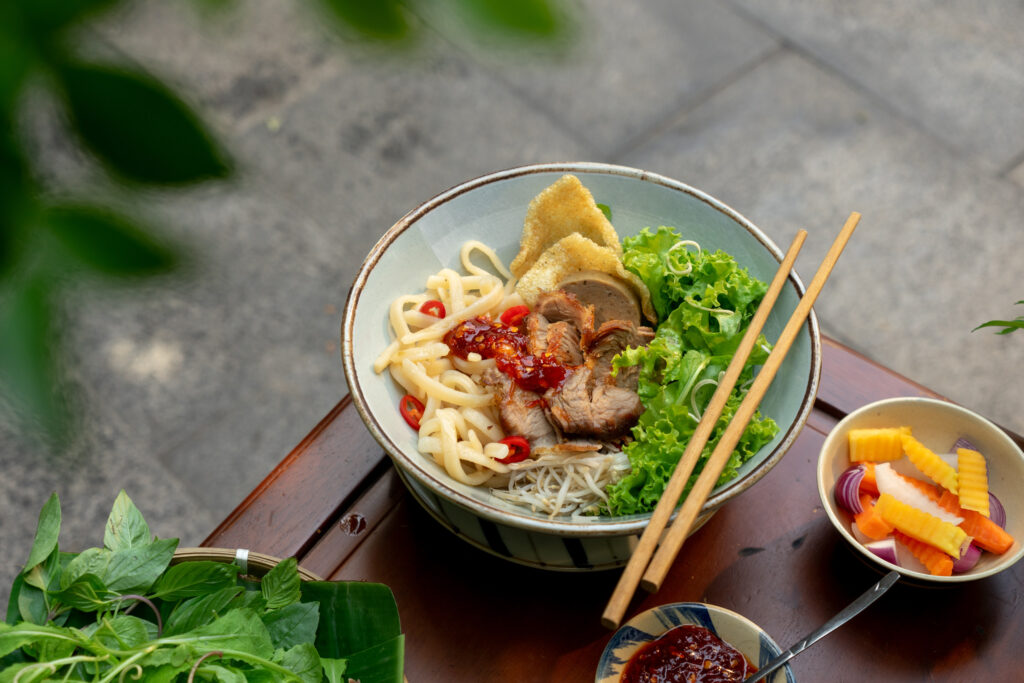
From the book project Hoi An – The Lifestyle & The Food.